

Kids' Toy and Clothing Storage Hacks! Fostering Self-Sufficiency from an Early Age 👧👦
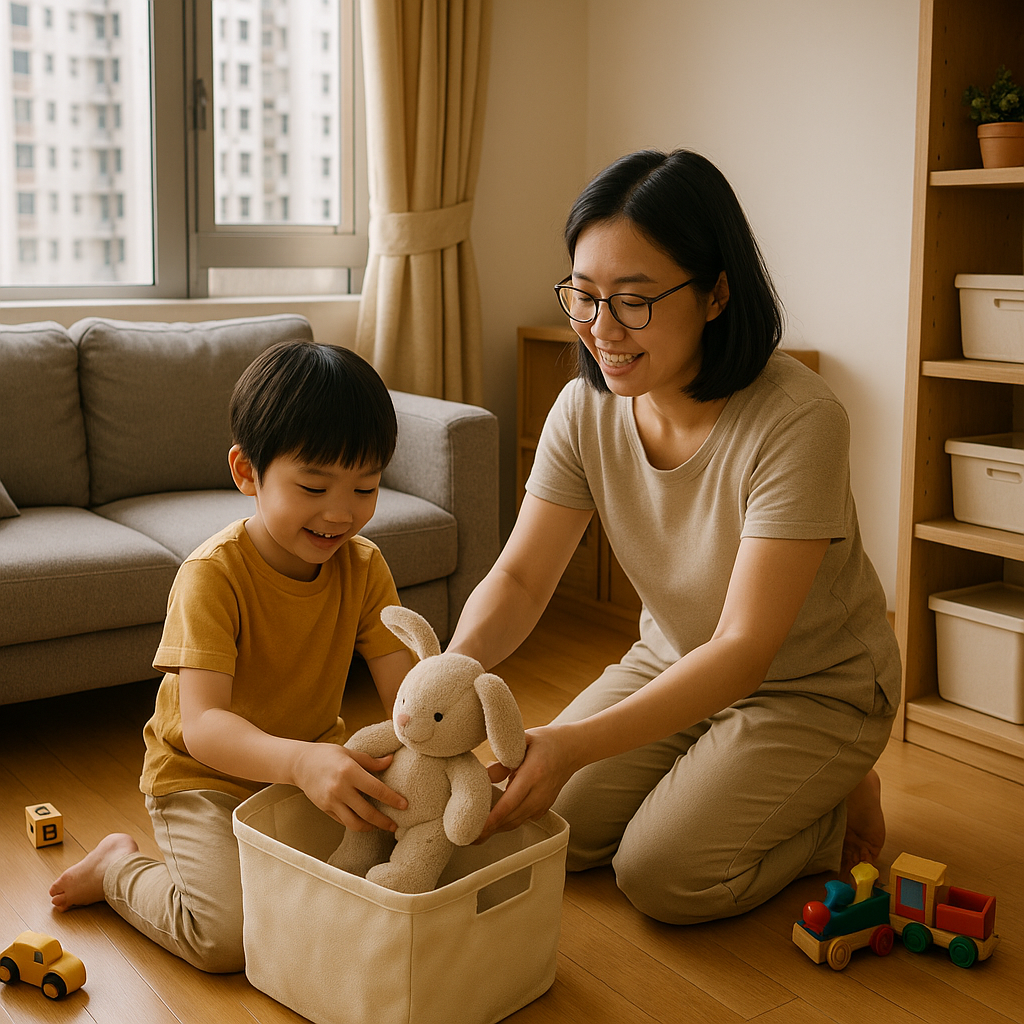
Why should we teach children to organize? 🤔
Dear parents, do you often find yourselves in this situation: as soon as you get home, you see toys, clothes, socks, and shoes scattered all over the floor? 😱 Your children's belongings keep piling up, and your home gets messier and messier – it feels like "you can never finish tidying up"! In fact, teaching children to organize not only makes your home tidier but also cultivates their self-care skills and sense of responsibility. It's a win-win! Today, I'll share how you can turn organizing into a parent-child activity, allowing children to participate and gradually develop good habits.
The Principle of Decluttering: Teaching Children to "Let Go" 🧸
Many parents face a common problem: their children have too many toys, but they are reluctant to part with them! We can gradually teach children the "decluttering principle" so they understand that "owning too much can actually make you lose the heart to cherish things."
-
Sort Together: Work with your child to categorize toys into three groups: "favorites," "likes," and "rarely played with."
-
Guide Their Thinking: Ask your child: "How long has it been since you played with this toy?" "Do you think giving it to other children would make them happier?"
-
Set Limits: For example, stipulate that once the toy box is full, some toys must be donated, or for every new toy received on birthdays or Christmas, an equivalent number of old toys must be given away.
-
Lead by Example: Parents should also set an example by regularly organizing their own belongings, so children understand that "decluttering" is a family habit.
Organizing Principles: Right Location, Clear Labels, Easy Access 📦
#OrganizingTips #HomeOrganization #ParentChildActivities
To encourage children to organize on their own, the most important thing is to design an organizing system that works for them. Remember these key points:
-
Low-Level Storage: Place children's belongings within their reach so they can easily take and put them back.
-
Clear Labels: Use picture or color labels so children who can't read yet know where everything goes. You can make labels together with your child to increase their involvement.
-
Simple Categories: Don't over-categorize; for example, you can simply categorize into major groups like "cars," "dolls," and "blocks."
-
Open Storage: Use transparent bins or open shelves so children can easily see what's inside.
-
Regular Tidy-Ups: Dedicate a little time each week to tidy up with your child, turning it into a parent-child activity.
Clothing Organization: Cultivating Children's Fashion Sense 👕👖
It's easy to buy too many clothes for children, but in reality, they might only frequently wear a few items. Here are tips for organizing children's clothes:
-
Seasonal Storage: Store off-season clothes to reduce the burden on the wardrobe.
-
Folding Training: Teach children simple folding methods, such as the "three-fold method," so they can participate in the organizing process.
-
Clothing Rotation: Each week, pre-select five outfits and place them where your child can reach them, allowing them to choose their own clothes and foster independence.
-
Vertical Storage: Store clothes vertically so children can easily see what's available without rummaging.
-
Clothing Decluttering: Regularly check your child's clothes and donate those that are too small, damaged, or rarely worn.
Parent-Child Organizing Games: Learning Through Play 🎮
To make children love organizing, the best way is to turn it into a game! Try these methods:
-
Organizing Competition: Time who can tidy up the fastest and neatest.
-
Treasure Hunt: "Today we need to put all the blue toys into this box," and let the child find them.
-
Role-Playing: Play "Organizing Superhero" or "Tidying Master," and there's a reward for completing the task.
-
Organizing Song: Sing while organizing, for example, adapt a "Tidy-Up Song": "Tidying up, tidying up, it's so fun, toys go home, clothes go in the closet..."
-
Story Time: Tell stories about organizing and sharing, such as "Little Bear Who Had Too Many Things," so children understand the troubles of owning too much.
Recommended Organizing Products: ManyMart Can Help You 🛒
#OrganizingEssentials #OnlineShoppingRecommendations #ManyMart
To organize effectively, you definitely need the right tools! ManyMart online shopping platform has many organizing essentials for children and summer must-haves. Let me recommend a few to you:
-
Transparent Storage Bins: Can hold toys and books, allowing children to easily see what's inside.
-
Multi-Tier Storage Shelves: Low-level design, suitable for children, can be used to categorize different toys.
-
Wall-Mounted Storage Bags: Utilize wall space for small toys, stationery, etc.
-
Folding Board: Helps children learn to fold clothes and keeps the wardrobe tidier.
-
Waterproof Storage Bags: A summer essential, perfect for storing wet swimsuits, beach toys, etc.
ManyMart not only has a wide range of organizing products but also many other great items for children to enjoy the summer. Best of all, they offer free shipping on all orders over $99, support PayMe, Alipay, WeChat Pay, and major credit cards, and orders placed before 9 PM can be delivered as early as the same day – it's incredibly convenient!
Conclusion: Organizing is a Way of Life 🏡
Teaching children to organize is not just about having a beautiful home; it's about cultivating their attitude towards life and their values. When children learn how to organize their own space, they will show greater respect for their belongings and those of others, and learn to share and be grateful.
Remember, organizing is not an overnight task; it requires patience and persistence from parents. Most importantly, the whole family should participate, turning organizing into an enjoyable family activity rather than a burden.
I hope these tips are helpful to all parents in creating a warm and tidy home where children can grow up in an orderly environment!